Die Top 8 Trends im Bereich agentisches KI-Marketing für 2026
Betrachten wir die Trends im Bereich agentisches KI-Marketing, die die Branche verändern könnten, und wie du der Entwicklung einen Schritt voraus sein kannst.
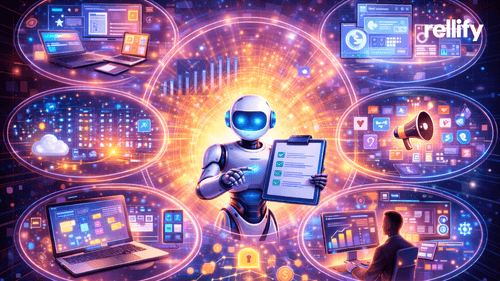
Von Jayne Schultheis – Als Marketer nutzt du vielleicht bereits KI-Tools, um Inhalte zu entwerfen, Ideen zu generieren oder Routineaufgaben zu automatisieren. Doch nun eröffnet sich eine neue Dimension – das Zeitalter der agentischen KI. Heute können diese Systeme tatsächlich selbstständig komplexe Marketing-Workflows planen, durchdenken und ausführen.
Das ist nicht nur ein Hype. Laut McKinseys „State of AI“-Bericht für 2025 experimentieren 62 % der Unternehmen zumindest mit KI-Agenten. Die Lücke zwischen Experimentieren und unternehmensweitem Einsatz bietet eine Chance für Marketingleiter, die die Nase vorn behalten wollen.
Und laut Gartner werden bis Ende 2026 40 % der Unternehmensanwendungen aufgabenspezifische KI-Agenten enthalten. Das bedeutet, dass die Tools, die du täglich nutzt, bald über integrierte autonome Funktionen verfügen werden. In diesem Artikel werfen wir einen Blick darauf, wie sich agentische KI bis 2026 verändern wird und wie du der Entwicklung einen Schritt voraus sein kannst.
Was agentische KI für Marketer im Jahr 2026 bedeutet
Agentische KI-Systeme sind autonome Software-Entitäten, die auf Automatisierung, Schlussfolgerungen und Anpassung ausgelegt sind. Sie sind in der Lage, Daten zu sammeln, zu planen und mit einem hohen Maß an Autonomie zu handeln.
Stell es dir so vor: Herkömmliche Automatisierung folgt Regeln, die du festlegst. Generative KI erstellt Inhalte, wenn du sie darum bittest. Aber agentische KI? Sie identifiziert Probleme, entwickelt Lösungen und ergreift Maßnahmen (oftmals, ohne dass du sie überhaupt dazu auffordern musst).
Marketer nutzen agentische KI in der Regel auf drei Arten:
Agenten für Marketer (interne Abläufe). Das sind deine Helfer hinter den Kulissen. Stell dir KI vor, die deine Werbeausgaben kanalübergreifend autonom optimiert, die Kampagnenleistung analysiert und Budgets in Echtzeit neu verteilt
Agenten, die du deinen Kunden präsentierst (CX). Kundenservice-Bots und KI-SDRs fallen in diese Kategorie. Wenn sie gut funktionieren, bieten sie schnellere Lösungen und eine bessere Reaktionsfähigkeit. Doch wie Scott Brinker, Herausgeber von Chiefmartec.com, auf der MarTech-Konferenz im November betonte, reicht es nicht aus, dass kundenorientierte Agenten die interne Effizienz verbessern – sie müssen auch das Kundenerlebnis verbessern
Agenten der Kunden (Käuferseite). Hier wird es interessant. Deine Kunden nutzen zunehmend KI-Assistenten, um Produkte zu recherchieren, Optionen zu vergleichen und Kaufentscheidungen zu treffen. Du betreibst also Marketing an KI-Agenten sowie mit ihnen. (Darauf gehen wir später noch näher ein.)
Was sind die wichtigsten Marketingtrends im Bereich agentische KI?
Eine Studie von Dresner Advisory Services zeigt, dass unter Vertriebs- und Marketingorganisationen 19 % agentische KI aktiv einsetzen und 33 % sich auf eine frühzeitige Einführung vorbereiten.
Derselbe Bericht besagt, dass Marketingleiter, als sie gebeten wurden, die wichtigsten potenziellen Vorteile von agentischer KI zu bewerten, folgende Punkte nannten:
Verbessertes Kundenerlebnis und Personalisierung
Präzisere Entscheidungsfindung
Produktivitätssteigerungen
Auch die finanziellen Auswirkungen sind real. Fast 40 % der Befragten einer McKinsey-Umfrage führen derzeit Auswirkungen auf das EBIT auf Unternehmensebene auf KI zurück, aber eine Mehrheit gibt an, dass der Einsatz von KI in ihren Unternehmen die Innovation verbessert hat. Fast die Hälfte berichtet von einer Verbesserung der Kundenzufriedenheit und einer Wettbewerbsdifferenzierung.
Hier ist der Haken: Die Marketing-Bereitschaft für agentische KI hängt eng mit der Reife der Daten- und Business-Intelligence-Grundlagen zusammen. Wenn deine Daten nicht in Ordnung sind, wird dich agentische KI nicht retten.
Hier ein Blick auf acht Punkte
1. Marketing für KI-Agenten wird zu einer neuen Disziplin
Erinnerst du dich noch daran, als du für Suchmaschinen optimiert hast? Jetzt müssen wir auch für KI-Agenten optimieren.
Da Agenten auf der Käuferseite immer ausgefeilter werden, verändern sie die Art und Weise, wie Kunden deine Angebote entdecken und bewerten. Diese Agenten durchsuchen Websites nicht so wie Menschen. Stattdessen parsen sie strukturierte Daten, analysieren Entitätsbeziehungen und synthetisieren Informationen aus mehreren Quellen.
Das bedeutet, dass du dich auf die Optimierung für Antwort-Engines (AEO) einlassen musst. Hier ist, was sich ändert: Der durch KI generierte Traffic stieg von Januar bis Mai 2025 um 527 %. ChatGPT verarbeitet mittlerweile monatlich 72 Milliarden Nachrichten.
Der Wandel geht weg vom „ersten Platz im Ranking“ hin zu einem neuen Ziel: „die Antwort zu sein“. Dies erfordert entitätsreiche Inhalte, maschinenlesbare Signale wie Schema-Markup und klare interne Verlinkungsmuster, die der KI helfen, deine Inhaltshierarchie zu verstehen.
2. Multi-Agenten-Orchestrierung und kollaborative KI-Systeme
Einzelne KI-Agenten sind beeindruckend. Aber die Zukunft sieht eher so aus: Teams aus spezialisierten Agenten, die zusammenarbeiten.
Multi-Agenten-Orchestrierung beinhaltet spezialisierte Agenten, die zusammenarbeiten, um komplexe Arbeitsabläufe abzuschließen. Stell dir vor: Ein Vertriebsagent verhandelt ein Angebot, ein Finanzagent validiert die Marge, ein Lageragent bestätigt die Verfügbarkeit und ein Fulfillment-Agent löst die Zuweisung aus. Sie alle arbeiten autonom, wobei Menschen an wichtigen Kontrollpunkten die Aufsicht haben.
Für Marketingteams könnte das bedeuten, dass Campaign-Intelligence-Agenten kontinuierlich das Verhalten analysieren, Content-Operations-Agenten die Planung bis zur Verteilung übernehmen und Customer-Journey-Agenten die Pfade dynamisch basierend auf individuellen Interaktionen anpassen.
Das Ergebnis: Betrieb rund um die Uhr, weniger Engpässe und konsistente Ausführung ohne die Einschränkungen menschlicher Arbeitszeiten.
3. AEO hat Vorrang
Die Spielregeln der Suche haben sich geändert. Traditionelles SEO konzentrierte sich auf das Ranking für Keywords und das Generieren von Klicks. Eine AEO-basierte digitale Strategie konzentriert sich darauf, von ChatGPT, Perplexity, Googles AI Overview oder anderen Antwort-Engines als die definitive Antwort ausgewählt zu werden.
Das verändert deinen Content-Ansatz:
Von Keywords zu Konzepten. KI-Agenten verstehen semantische Beziehungen und den Kontext. Um ihre Aufmerksamkeit zu gewinnen, behandle Themen umfassend und definiere Beziehungen zwischen Konzepten klar
Von Seiten zu Wissensgraphen. Interne Verlinkungen helfen dabei, KI-Agenten beizubringen, wie deine Produkte, Dienstleistungen und dein Fachwissen zusammenhängen
Von Backlinks zu Zitaten. KI-Agenten schätzen zunehmend gut recherchierte, sachlich korrekte Informationen. Als maßgebliche Quelle zitiert zu werden, wird genauso wertvoll wie ein Backlink
Die praktische Erkenntnis: Überprüfe deine Inhalte auf maschinelles Verständnis. Kann ein KI-Agent wichtige Fakten leicht extrahieren? Sind Beziehungen klar definiert?
4. Autonome Kampagnenkoordination
Hier wird agentische KI von interessant zu transformativ.
In einer McKinsey-Umfrage gaben die Befragten am häufigsten Kostenvorteile durch KI-Aktivitäten in den Bereichen Softwareentwicklung, Fertigung und IT an. Umsatzsteigerungen durch den Einsatz von KI werden am häufigsten in den Bereichen Marketing und Vertrieb, Strategie und Unternehmensfinanzierung sowie Produktentwicklung genannt.
Autonome Kampagnenkoordination bedeutet, dass KI-Agenten die Performance kanalübergreifend kontinuierlich überwachen, Optimierungsmöglichkeiten identifizieren und Änderungen umsetzen – und das alles unter Einhaltung deiner Markenrichtlinien. Ein Agent könnte beispielsweise feststellen, dass das Engagement in den sozialen Medien dienstags sinkt, die Öffnungsraten von E-Mails jedoch steigen, und dann automatisch die Budgetverteilung umschichten und die Versandzeiten anpassen, ohne dass menschliches Eingreifen erforderlich ist.
Anstatt auf die Kampagnenleistung zu reagieren, sagen Agenten wahrscheinliche Ergebnisse voraus und passen die Taktik proaktiv an. Der Schlüssel liegt darin, „Human-in-the-Loop“-Kontrollpunkte für Markensicherheit, Budgetgenehmigungen und strategische Ausrichtung beizubehalten.
5. Agentische KI hilft dir, persönlich zu werden
Marketer wissen, wie Personalisierung seit Jahren den Marketing-Zeitgeist verändert. Aber agentische KI macht dies in einem Umfang und einer Tiefe möglich, die wir noch nie erreicht haben.
Laut einer Umfrage gaben 80 % der Verbraucher an, dass sie mittlerweile erwarten, dass KI-Interaktionen Empathie und den Ton der Marke widerspiegeln, nicht nur Effizienz. Hier kommt Personality Engineering ins Spiel: die Kunst und Wissenschaft, Empathie, Tonfall und Markenwerte in die KI zu programmieren. Es lehrt Agenten nicht nur, was sie sagen sollen, sondern auch, wie sie es mit Authentizität, Nuancen und kultureller Sensibilität sagen.
Stell es dir so vor: Du würdest die Stimme deiner Marke in einem Super-Bowl-Spot nicht an die IT-Abteilung auslagern. Genauso solltest du die Stimme deiner Marke in KI-Interaktionen nicht ohne die intensive Einbindung des Marketings auslagern.
Dieser Wandel führt uns vom „Segment of One“ zum „Moment of One“ – mit kontextbezogener Personalisierung in Echtzeit, die sich daran anpasst, wo sich Kunden gerade auf ihrer Customer Journey befinden. Das Marketing muss die Stimme des Agenten kontrollieren, denn diese Interaktionen werden schnell zum ersten Kontaktpunkt mit deiner Marke.
6. Demokratisierung durch No-Code-Plattformen
Hier ist die gute Nachricht: Agentic AI wird für nicht-technische Nutzer durch No-Code-Plattformen zugänglich, mit denen du benutzerdefinierte KI-Agenten über Drag-and-Drop-Oberflächen erstellen kannst.
Die Vorteile sind: schnellere Bereitstellung, geringere Abhängigkeit von der IT und Stärkung der Teammitglieder. Marketingteams können Lösungen entwickeln und bereitstellen, ohne auf technische Ressourcen warten zu müssen.
Doch Demokratisierung bringt Verantwortung mit sich. Du musst einige Red-Teaming-Maßnahmen durchführen und Folgendes implementieren:
Governance und Leitplanken zur Wahrung der Markenkonsistenz
Qualitätskontrollmechanismen zur Validierung der Agentenleistung
Schulungsprogramme
Sicherheitsframeworks zum Schutz von Kundendaten
7. Datenrückverfolgbarkeit und „Daten als Währung“
Wenn du im MarTech-Bereich arbeitest, musst du dein Verständnis der Datenanforderungen für agentische KI erweitern.
Autonome Entscheidungsfindung erfordert Daten, die sowohl genau als auch rückverfolgbar sind. Wenn ein Agent eine Entscheidung trifft, die sich auf das Kundenerlebnis oder die Budgetverteilung auswirkt, musst du genau verstehen, welche Daten dieser Entscheidung zugrunde lagen.
Dies bringt neue Anforderungen mit sich: Daten mit nachverfolgbarer Herkunft und klarer Abstammung, Zugriff auf Daten in natürlicher Sprache, damit Agenten Informationen intuitiv abfragen können, sowie synthetische Daten für Szenariosimulationen, ohne Produktionsdaten oder die Privatsphäre der Kunden zu gefährden.
Eine starke, disziplinierte Daten-Governance unterscheidet Vorreiter von den anderen bei der Einführung von agentischer KI.
8. Intelligente Automatisierung transformiert Content-Ops
Agentische KI definiert den Content-Lebenszyklus neu:
Planung. KI-gesteuerte Lückenanalyse und Identifizierung von Chancen
Erstellung. Generierung von Assets in verschiedenen Formaten (Text, Bild, Audio, Video)
Governance. Automatisierte Marken-Compliance und rechtliche Prüfung
Distribution. Optimales Timing und Kanalauswahl
Optimierung. Kontinuierliche, leistungsbasierte Verfeinerung
Agentische KI durchbricht Content-Silos durch die Integration von Planung, Erstellung, Governance und Bereitstellung. Sie kann auch dazu beitragen, manuelle Übergaben und Genehmigungsengpässe zu beseitigen. Dies stellt eine funktionsübergreifende Transformation dar und nicht nur fragmentierte Anwendungsfälle.
Technologie erweitert die Effektivität von Marketern. Content-Ersteller werden zu Strategen für die Markenstimme. Analysten werden zu Interpreten von Erkenntnissen. Marketer entwickeln sich zu Workflow-Architekten.
Der Weg in die Zukunft mit agentischer KI im Marketing
Unternehmen, die mit agentischer KI erfolgreich sein wollen, müssen eine starke Datenbasis aufbauen, in Workflows statt in Tools denken und die menschliche Aufsicht beibehalten. Agentische KI ersetzt keine Marketer, sie erweitert ihre Fähigkeiten.
Wenn du bereit bist, in die Welt der agentischen KI einzutauchen, brauchst du die richtigen Tools. Rex, der Experten-Agent von Rellify, ist Teil dieser neuen Generation von Marketing-Intelligence. Er kann sowohl Marktdaten als auch deine firmeneigenen Informationen in umsetzbare Strategien, Briefings und Content-Workflows umwandeln. Rex kann außerdem Content-Lücken aufdecken, die bei Wettbewerbern bestehen, und Marktdaten und Forschungsergebnisse in Smart Cards einbinden – eine Art visuelle „Battle Card“, die du ganz einfach in Präsentationen, One-Pager und Content-Briefings einbinden kannst.
Speziell entwickelte agentische Plattformen wie Rex sind der Weg der Zukunft. Bist du bereit herauszufinden, worum es dabei geht? Sprich noch heute mit einem unserer Experten für eine Demo.